Domain osmm.de kaufen?
Wir ziehen mit dem Projekt
osmm.de um.
Sind Sie am Kauf der Domain
osmm.de interessiert?
domain@kv-gmbh.de · 0541-91531010
Domain osmm.de kaufen?
Was ist diatonische Mundharmonika?
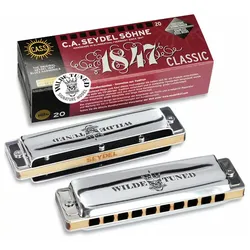
Die diatonische Mundharmonika ist ein Musikinstrument, das aus einem Kanzellenkörper mit Metallzungen besteht. Sie wird oft auch als Blues Harp bezeichnet. Im Gegensatz zur chromatischen Mundharmonika ist die diatonische Mundharmonika auf eine bestimmte Tonart beschränkt und hat normalerweise einen Umfang von einer Oktave. Sie wird häufig in der Blues-, Folk- und Countrymusik eingesetzt und ist für ihr charakteristisches Klangbild bekannt. Die diatonische Mundharmonika wird durch Ein- und Ausatmen gespielt, wodurch verschiedene Töne erzeugt werden können. **
Was ist eine diatonische Mundharmonika?
Eine diatonische Mundharmonika ist ein Musikinstrument, das aus einem Körper, einem Satz Stimmzungen und einem Luftkanal besteht. Im Gegensatz zur chromatischen Mundharmonika ist die diatonische Mundharmonika auf eine bestimmte Tonart oder Skala beschränkt. Das bedeutet, dass sie nur die Töne der jeweiligen Tonart spielen kann, was sie ideal für bestimmte Musikgenres wie Blues, Country und Folk macht. Diatonische Mundharmonikas sind in verschiedenen Tonarten erhältlich und werden häufig für Soli, Melodien und rhythmische Begleitung verwendet. **

Ähnliche Suchbegriffe für Diatonische
Top-Angebote
Produkte zum Begriff Diatonische:
-
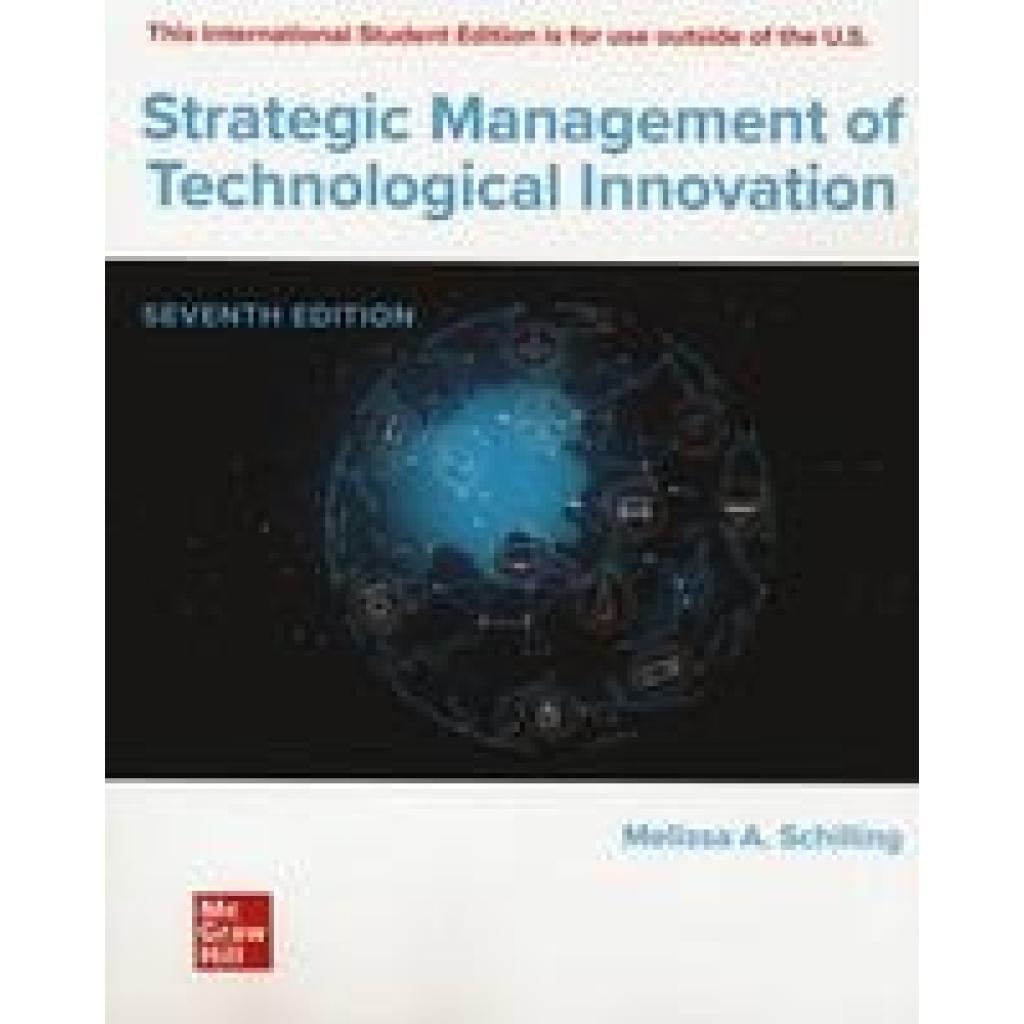
Schilling, Melissa: Strategic Management of Technological Innovation ISEStrategic Management of Technological Innovation ISE , Melissa Schilling's Strategic Management of Technological Innovation is the #1 innovation strategy text in the world. It approaches the subject of innovation management as a strategic process, and is organized to mirror the strategic management process used in most strategy textbooks, progressing from assessing the competitive dynamics of a situation to strategy formulation, to strategy implementation. While the book emphasizes practical applications and examples, it also provides systemic coverage of the existing research and footnotes to guide further reading. It is designed to be a primary text for courses in strategic management and innovation and new product development. It is written with the needs of both business students and engineering students. , > , Auflage: 7h edition, Erscheinungsjahr: 20220329, Produktform: Kartoniert, Autoren: Schilling, Melissa, Auflage: 22007, Auflage/Ausgabe: 7h edition, Abbildungen: 77 Illustrations, unspecified, Fachschema: Business / Management~Management~Management / Strategisches Management~Strategisches Management~Unternehmensstrategie / Strategisches Management, Fachkategorie: Management und Managementtechniken, Imprint-Titels: McGraw-Hill Education, Warengruppe: HC/Wirtschaft/Management, Fachkategorie: Strategisches Management, Seitenanzahl: XVII, Seitenanzahl: 349, UNSPSC: 49019900, Warenverzeichnis für die Außenhandelsstatistik: 49019900, Verlag: McGraw-Hill Education Ltd, Verlag: McGraw-Hill Education Ltd, Länge: 228, Breite: 185, Höhe: 16, Gewicht: 594, Produktform: Kartoniert, Genre: Importe, Genre: Importe,56,81 €*Versand: 0,00 €Sichere Weiterleitung zum Anbieter
-
Weber, Sabine: Technology and Innovation in Yu Wanchun's (¿¿¿, 1793? - 1849) Novel Records of Quelling the Bandits (Dangkou zhi ¿¿¿, 1853)Technology and Innovation in Yu Wanchun's (¿¿¿, 1793? - 1849) Novel Records of Quelling the Bandits (Dangkou zhi ¿¿¿, 1853) , As the first book-length study devoted exclusively to developments of Chinese science fiction before 1902, Sabine Weber explores the question of how to relate the early literary elements to the later, self-conscious modern forms and unite them in a comprehensive history of Chinese science fiction. By taking Yu Wanchun's (¿¿¿, 1793?-1849) sequel to Jin Shengtan's (¿¿¿, 1608-1661) rendition of The Water Margin ( Shuihu zhuan ¿¿¿, 1644) Records of Quelling the Bandits ( Dangkou zhi ¿¿¿, 1853) as a primary source she also analyzes the specific role of the literary 19th century in the history of the emergence of science fiction in China. The novel of the Late Qing period (ca. 1793-1896) represents a special case in the historical process, as it developed structural and motif-oriented patterns that brought it close to structurally "modern" science fiction in terms of the epistemological basis of Chinese science and technology history. Written in the style of the classic Water Margin , but by a militarist thinker from the background of jingshi zhiyong ¿¿¿¿ (literally meaning "managing the world by extending practical utility") in 19th-century Jiangnan, Records of Quelling the Bandits serves as a vivid example of how contemporary Chinese discourses of innovation and practical knowledge were imbedded in established literary frameworks. It was this combination of rationality and pragmatism with classical poetics and literary motifs that pushed images of traditional fiction, hearsay and legend towards speculative technology and theoretical thought experiments, thus providing the basis for the translation-inspired early modern science fiction novel from the end of the century. , Sport-Vergaser > Kraftstoffversorgung , Erscheinungsjahr: 20241211, Titel der Reihe: Veröffentlichungen des Ostasien-Instituts der Ruhr-Universität, Bochum#73#, Autoren: Weber, Sabine, Seitenzahl/Blattzahl: 362, Abbildungen: 21 illustrations, 5 tables, Keyword: China/Science Fiction; Chinese Studies; Comparative Studies; Cultural History; Literary History; Qing period, Fachschema: China / Geschichte (bis 1945)~Literaturwissenschaft~Cultural Studies~Kulturwissenschaften~Wissenschaft / Kulturwissenschaften~Medientheorie~Medienwissenschaft, Fachkategorie: Literatur: Geschichte und Kritik~Kultur- und Medienwissenschaften~Geschichte: Ereignisse und Themen, Warengruppe: HC/Geschichte/Regionalgeschichte, UNSPSC: 49019900, Warenverzeichnis für die Außenhandelsstatistik: 49019900, Länge: 240, Breite: 170, Höhe: 24, Gewicht: 845, Produktform: Gebunden, Genre: Geisteswissenschaften/Kunst/Musik,89,00 €*Versand: 0,00 €Sichere Weiterleitung zum Anbieter


-
Wie viele Töne umfasst eine traditionelle diatonische Tonleiter?
Eine traditionelle diatonische Tonleiter umfasst insgesamt sieben Töne. Diese Töne sind Dur-Tonleitern und bestehen aus einer Abfolge von ganzen und halben Tönen. Die sieben Töne wiederholen sich in Oktaven. **
-
Wie viele Töne umfasst die diatonische Tonleiter in der Musik?
Die diatonische Tonleiter umfasst insgesamt sieben Töne. Diese Töne sind Dur- oder Molltöne und bilden die Grundlage für viele Musikstücke. Die Tonleiter besteht aus den Tönen C-D-E-F-G-A-H (bzw. B). **
-
Wie viele Töne umfasst eine diatonische Tonleiter in der westlichen Musik?
Eine diatonische Tonleiter in der westlichen Musik umfasst insgesamt sieben Töne. Diese Töne sind durch Ganz- und Halbtonschritte voneinander getrennt. Die Tonleiter besteht aus der Tonika, der Superdominante, der Dominante, der Subdominante, der Mediante, der Submediante und der Leitton. **
-
Welche Töne umfasst die diatonische Tonleiter und wie ist sie aufgebaut?
Die diatonische Tonleiter umfasst sieben Töne, die aufeinanderfolgend in ganzen und halben Tonschritten angeordnet sind. Sie besteht aus den Tönen C-D-E-F-G-A-H (bzw. B). Die Tonleiter folgt dem Muster von ganzen und halben Tonschritten, wobei zwischen den meisten Tönen ein ganzer Tonabstand liegt, außer zwischen E-F und H-C, wo nur ein halber Tonabstand besteht. **


Wie viele Töne umfasst eine diatonische Tonleiter? Und welche sind es?
Eine diatonische Tonleiter umfasst sieben Töne. Diese sind: C, D, E, F, G, A, B. **
Wie viele Töne umfasst die diatonische Tonleiter und welche sind sie?
Die diatonische Tonleiter umfasst 7 Töne. Es sind die Töne C, D, E, F, G, A und H. **
Top-Angebote
Produkte zum Begriff Diatonische:
-
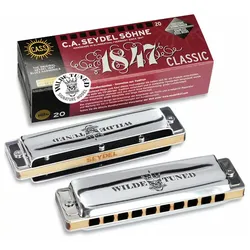
Legami Diatonische HarmonikaGeh Mit Deinem Atem Sorgfältig Um: Puste In Die Diatonische Mundharmonika Mit Grundton C Von Legami Und Gib Dabei Alles. Du Wirst Dich Wie Ein Echter Blueskünstler, Direkt Aus Dem Süden Der Usa, Oder Wie Der Autor Eines Western-soundtracks Fühlen....9,99 €*Versand: 2,95 €Sichere Weiterleitung zum Anbieter
-
Schilling, Melissa: Strategic Management of Technological Innovation ISEStrategic Management of Technological Innovation ISE , Melissa Schilling's Strategic Management of Technological Innovation is the #1 innovation strategy text in the world. It approaches the subject of innovation management as a strategic process, and is organized to mirror the strategic management process used in most strategy textbooks, progressing from assessing the competitive dynamics of a situation to strategy formulation, to strategy implementation. While the book emphasizes practical applications and examples, it also provides systemic coverage of the existing research and footnotes to guide further reading. It is designed to be a primary text for courses in strategic management and innovation and new product development. It is written with the needs of both business students and engineering students. , > , Auflage: 7h edition, Erscheinungsjahr: 20220329, Produktform: Kartoniert, Autoren: Schilling, Melissa, Auflage: 22007, Auflage/Ausgabe: 7h edition, Abbildungen: 77 Illustrations, unspecified, Fachschema: Business / Management~Management~Management / Strategisches Management~Strategisches Management~Unternehmensstrategie / Strategisches Management, Fachkategorie: Management und Managementtechniken, Imprint-Titels: McGraw-Hill Education, Warengruppe: HC/Wirtschaft/Management, Fachkategorie: Strategisches Management, Seitenanzahl: XVII, Seitenanzahl: 349, UNSPSC: 49019900, Warenverzeichnis für die Außenhandelsstatistik: 49019900, Verlag: McGraw-Hill Education Ltd, Verlag: McGraw-Hill Education Ltd, Länge: 228, Breite: 185, Höhe: 16, Gewicht: 594, Produktform: Kartoniert, Genre: Importe, Genre: Importe,56,81 €*Versand: 0,00 €Sichere Weiterleitung zum Anbieter
-
Weber, Sabine: Technology and Innovation in Yu Wanchun's (¿¿¿, 1793? - 1849) Novel Records of Quelling the Bandits (Dangkou zhi ¿¿¿, 1853)Technology and Innovation in Yu Wanchun's (¿¿¿, 1793? - 1849) Novel Records of Quelling the Bandits (Dangkou zhi ¿¿¿, 1853) , As the first book-length study devoted exclusively to developments of Chinese science fiction before 1902, Sabine Weber explores the question of how to relate the early literary elements to the later, self-conscious modern forms and unite them in a comprehensive history of Chinese science fiction. By taking Yu Wanchun's (¿¿¿, 1793?-1849) sequel to Jin Shengtan's (¿¿¿, 1608-1661) rendition of The Water Margin ( Shuihu zhuan ¿¿¿, 1644) Records of Quelling the Bandits ( Dangkou zhi ¿¿¿, 1853) as a primary source she also analyzes the specific role of the literary 19th century in the history of the emergence of science fiction in China. The novel of the Late Qing period (ca. 1793-1896) represents a special case in the historical process, as it developed structural and motif-oriented patterns that brought it close to structurally "modern" science fiction in terms of the epistemological basis of Chinese science and technology history. Written in the style of the classic Water Margin , but by a militarist thinker from the background of jingshi zhiyong ¿¿¿¿ (literally meaning "managing the world by extending practical utility") in 19th-century Jiangnan, Records of Quelling the Bandits serves as a vivid example of how contemporary Chinese discourses of innovation and practical knowledge were imbedded in established literary frameworks. It was this combination of rationality and pragmatism with classical poetics and literary motifs that pushed images of traditional fiction, hearsay and legend towards speculative technology and theoretical thought experiments, thus providing the basis for the translation-inspired early modern science fiction novel from the end of the century. , Sport-Vergaser > Kraftstoffversorgung , Erscheinungsjahr: 20241211, Titel der Reihe: Veröffentlichungen des Ostasien-Instituts der Ruhr-Universität, Bochum#73#, Autoren: Weber, Sabine, Seitenzahl/Blattzahl: 362, Abbildungen: 21 illustrations, 5 tables, Keyword: China/Science Fiction; Chinese Studies; Comparative Studies; Cultural History; Literary History; Qing period, Fachschema: China / Geschichte (bis 1945)~Literaturwissenschaft~Cultural Studies~Kulturwissenschaften~Wissenschaft / Kulturwissenschaften~Medientheorie~Medienwissenschaft, Fachkategorie: Literatur: Geschichte und Kritik~Kultur- und Medienwissenschaften~Geschichte: Ereignisse und Themen, Warengruppe: HC/Geschichte/Regionalgeschichte, UNSPSC: 49019900, Warenverzeichnis für die Außenhandelsstatistik: 49019900, Länge: 240, Breite: 170, Höhe: 24, Gewicht: 845, Produktform: Gebunden, Genre: Geisteswissenschaften/Kunst/Musik,89,00 €*Versand: 0,00 €Sichere Weiterleitung zum Anbieter
-
Was ist diatonische Mundharmonika?
Die diatonische Mundharmonika ist ein Musikinstrument, das aus einem Kanzellenkörper mit Metallzungen besteht. Sie wird oft auch als Blues Harp bezeichnet. Im Gegensatz zur chromatischen Mundharmonika ist die diatonische Mundharmonika auf eine bestimmte Tonart beschränkt und hat normalerweise einen Umfang von einer Oktave. Sie wird häufig in der Blues-, Folk- und Countrymusik eingesetzt und ist für ihr charakteristisches Klangbild bekannt. Die diatonische Mundharmonika wird durch Ein- und Ausatmen gespielt, wodurch verschiedene Töne erzeugt werden können. **
-
Was ist eine diatonische Mundharmonika?
Eine diatonische Mundharmonika ist ein Musikinstrument, das aus einem Körper, einem Satz Stimmzungen und einem Luftkanal besteht. Im Gegensatz zur chromatischen Mundharmonika ist die diatonische Mundharmonika auf eine bestimmte Tonart oder Skala beschränkt. Das bedeutet, dass sie nur die Töne der jeweiligen Tonart spielen kann, was sie ideal für bestimmte Musikgenres wie Blues, Country und Folk macht. Diatonische Mundharmonikas sind in verschiedenen Tonarten erhältlich und werden häufig für Soli, Melodien und rhythmische Begleitung verwendet. **
-
Wie viele Töne umfasst eine traditionelle diatonische Tonleiter?
Eine traditionelle diatonische Tonleiter umfasst insgesamt sieben Töne. Diese Töne sind Dur-Tonleitern und bestehen aus einer Abfolge von ganzen und halben Tönen. Die sieben Töne wiederholen sich in Oktaven. **
-
Wie viele Töne umfasst die diatonische Tonleiter in der Musik?
Die diatonische Tonleiter umfasst insgesamt sieben Töne. Diese Töne sind Dur- oder Molltöne und bilden die Grundlage für viele Musikstücke. Die Tonleiter besteht aus den Tönen C-D-E-F-G-A-H (bzw. B). **
Ähnliche Suchbegriffe für Diatonische
-
Wie viele Töne umfasst eine diatonische Tonleiter in der westlichen Musik?
Eine diatonische Tonleiter in der westlichen Musik umfasst insgesamt sieben Töne. Diese Töne sind durch Ganz- und Halbtonschritte voneinander getrennt. Die Tonleiter besteht aus der Tonika, der Superdominante, der Dominante, der Subdominante, der Mediante, der Submediante und der Leitton. **
-
Welche Töne umfasst die diatonische Tonleiter und wie ist sie aufgebaut?
Die diatonische Tonleiter umfasst sieben Töne, die aufeinanderfolgend in ganzen und halben Tonschritten angeordnet sind. Sie besteht aus den Tönen C-D-E-F-G-A-H (bzw. B). Die Tonleiter folgt dem Muster von ganzen und halben Tonschritten, wobei zwischen den meisten Tönen ein ganzer Tonabstand liegt, außer zwischen E-F und H-C, wo nur ein halber Tonabstand besteht. **
-
Wie viele Töne umfasst eine diatonische Tonleiter? Und welche sind es?
Eine diatonische Tonleiter umfasst sieben Töne. Diese sind: C, D, E, F, G, A, B. **
-
Wie viele Töne umfasst die diatonische Tonleiter und welche sind sie?
Die diatonische Tonleiter umfasst 7 Töne. Es sind die Töne C, D, E, F, G, A und H. **
* Alle Preise verstehen sich inklusive der gesetzlichen Mehrwertsteuer und ggf. zuzüglich Versandkosten. Die Angebotsinformationen basieren auf den Angaben des jeweiligen Shops und werden über automatisierte Prozesse aktualisiert. Eine Aktualisierung in Echtzeit findet nicht statt, so dass es im Einzelfall zu Abweichungen kommen kann. ** Hinweis: Teile dieses Inhalts wurden von KI erstellt.